

The Truth Is in the Photography
When you look at a collection of photography, for many, their first thought is unfortunately, “I could have taken that picture.” But photography offers something remarkable: for a moment, while you stand in front of a work, you are literally seeing through another person’s eyes.
Unlike painting, where the work is an interpretation of a space, person, or time, photography allows us to look through the lens with the artist who captured it. Photography not only gives you the opportunity to see something you might otherwise have passed by, but also to capture a moment in time that will never exist again.
Much like capturing a ghost, a photograph holds onto a fleeting instant that is now only a memory. The photographer cannot create the world in front of them from nothing. They have the world as it exists and the tools, skill, and choices at their disposal: where to stand, where to look, what to include, what to leave outside the frame, and, perhaps most importantly, when to press the shutter.
That decision transforms an ordinary fraction of a second into something permanent.
In a way, photography is the only way we have learned to “cheat” time the eternal thief of life.
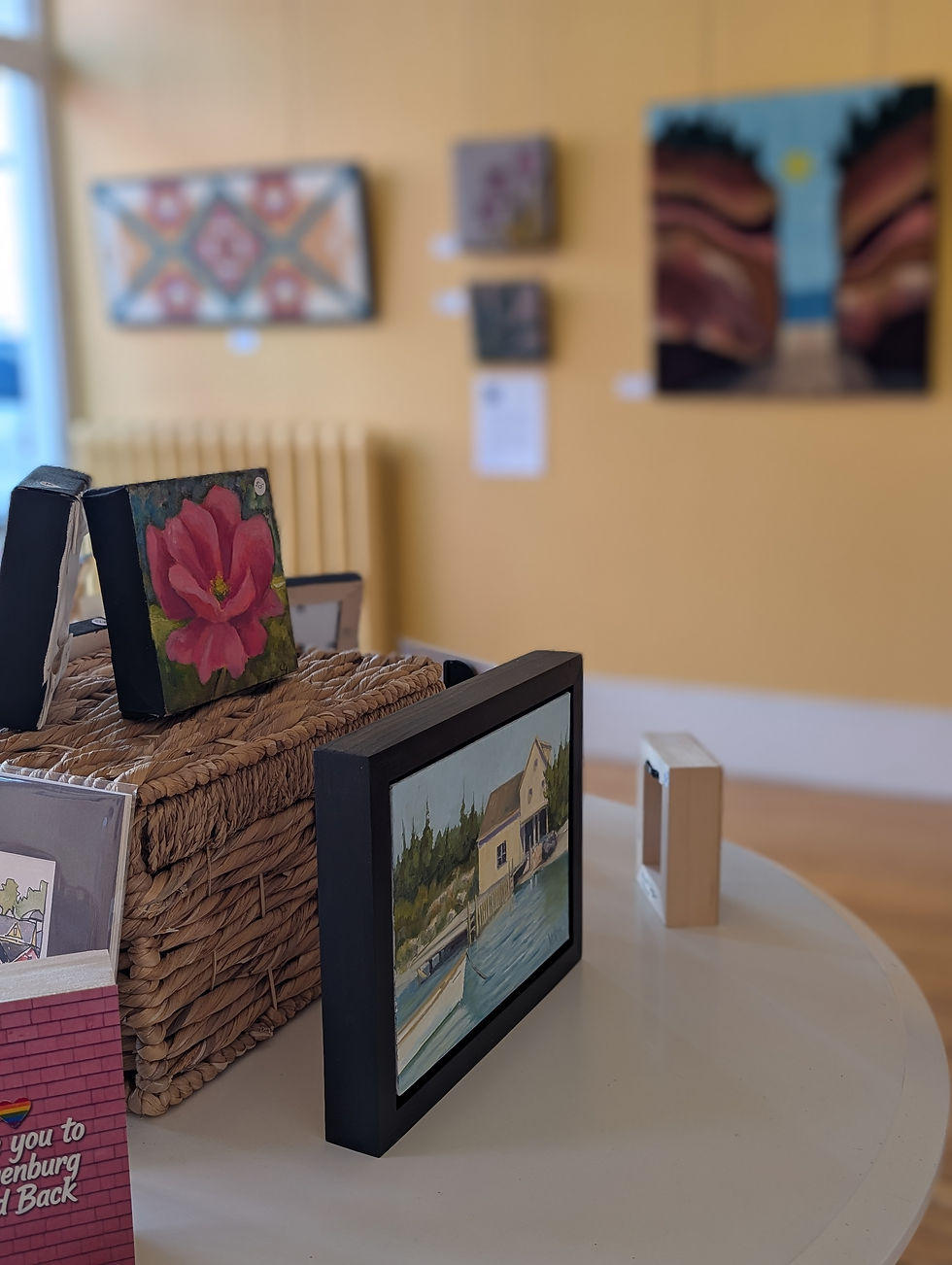
I met one such photographer on my most recent trip to Nova Scotia. In the little town of Lunenburg, just off the Lighthouse Route, I walked into a small gallery tucked into a row of colorful shiplap buildings called The Quartet Gallery. James Gray was manning the gallery that day, and one of his pieces held such a power over me that I knew I couldn’t leave Canada without it.

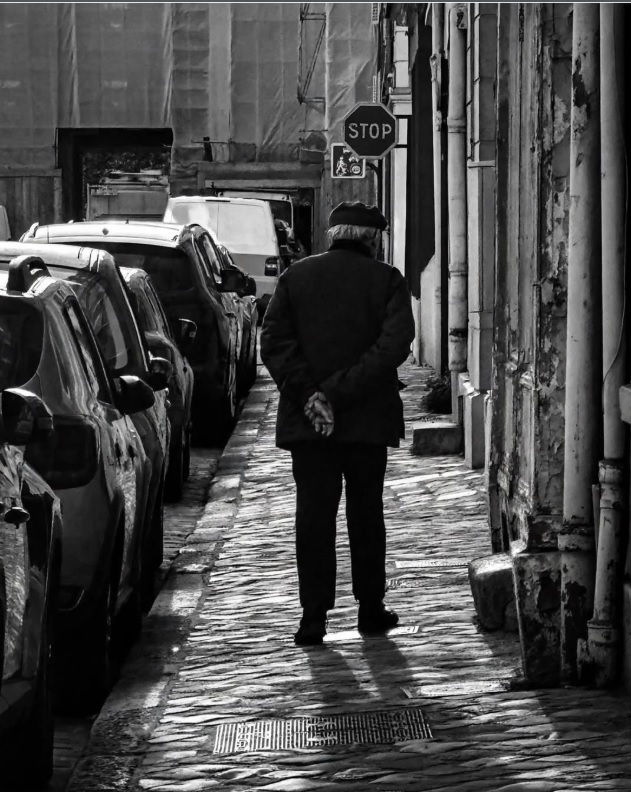
The piece that spoke to me most deeply was Non, Je Ne Regrette Rien. It is a beautifully rich, textured black-and-white photograph of an elderly man, his hands clasped behind his back, taking an afternoon stroll down a busy cobblestone street.
James told me about his time in France and how it had taught him to take life more slowly. In the evenings, he would witness the ritual of elderly men slowly strolling the streets at dusk. With nowhere to be and without a hurried thought, they walked at their own pace through the darkening streets.
There is an understanding within the photograph that your capability, speed, or destination doesn’t really matter. What matters is allowing yourself to move at your own pace, to simply enjoy life without regret. The name of this piece loosely translates to "no, I regret nothing." and that is what spoke to my soul. Life a life where the moment you are currently in is exactly where you are supposed to be.
Photography is so often overlooked, but it has so much to offer the viewer if you only look at the BIG picture (see what I did there?). James wasn’t capturing a historical event or a vast landscape. What he was capturing was far more interesting.
James caught a feeling. He caught the essence of a life.
In another piece of his, James tells the story of a small skiff that artists in the area would flock to for inspiration. He would see them painting it, and he often returned to the scene to capture it with his camera. Over the years, he ended up with a collection of photographs of this little boat.
Then, one day, it was gone.
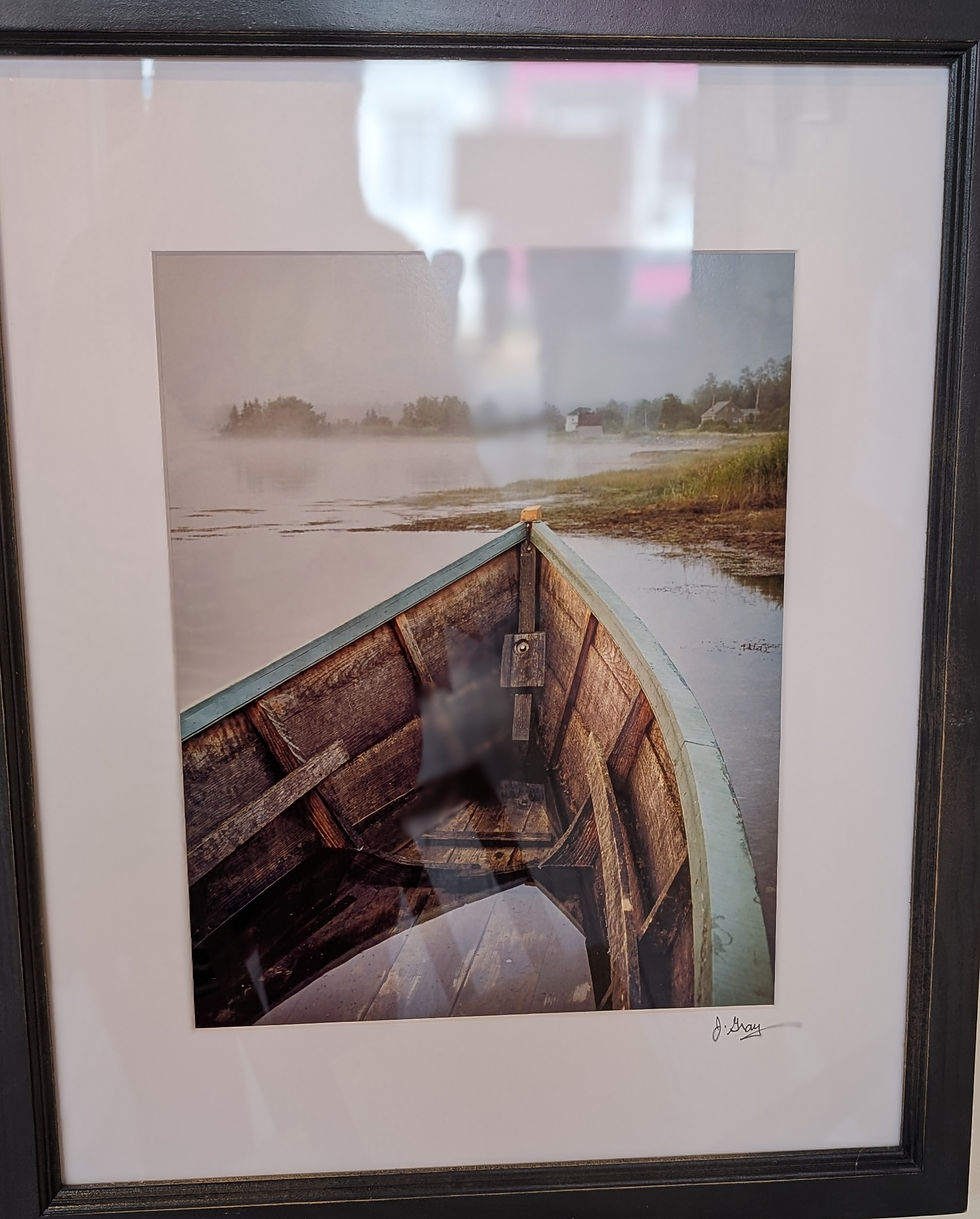
It had simply vanished. Without explanation or closure, something that had occupied that little piece of the world was suddenly no longer there. James’s photographs became some of the only hard evidence that it had ever existed at all.
THAT is what photography does. It cements us in place.
A painting does not necessarily depict something that ever existed, even when painted in a style that makes us believe it did. Photography gives us a different kind of grounding. At some point, something existed on the other side of that lens. A person stood on that street. A boat rested in that water. Light fell across a particular place in a particular way and someone was there to notice.
Of course, a photograph isn't absolute truth. It can be edited, manipulated, cropped, staged, or transformed through technique. The photographer decides what we see and, just as importantly, what we don't.
Maybe that is where the real truth in photography lies.
It isn't necessarily the truth of the entire world. It is the truth of what one person saw within it.
Please check out more of James Gray's work on his Instagram: https://www.instagram.com/whiterock302/


Comments